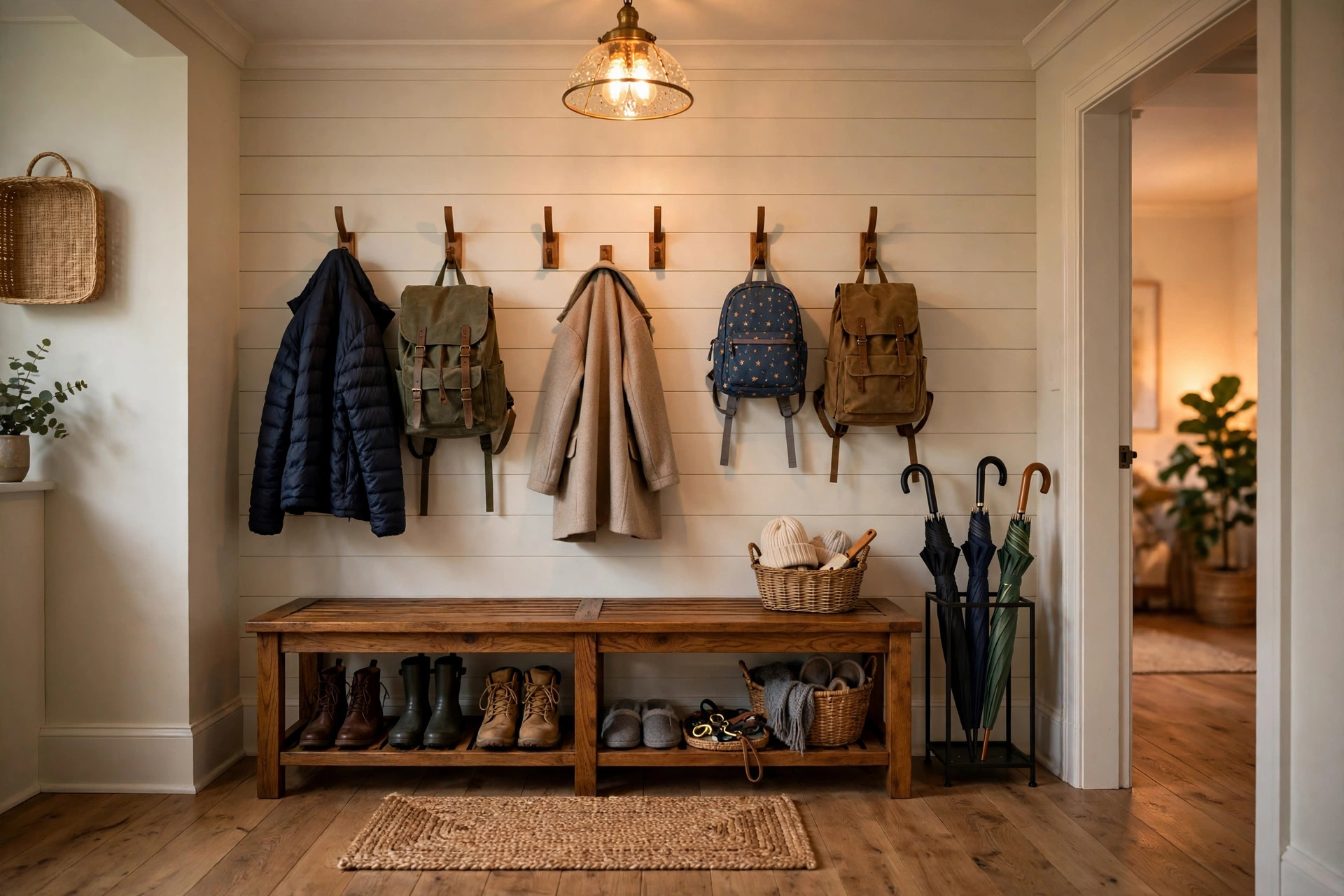
Our entryway used to be the worst room in the house. Not ugly — worse. It was a drift of shoes, a mountain of coats, a graveyard of permission slips and dead batteries, and a daily gauntlet of “has anyone seen my…” shouted from the front door. We tried the Pinterest version first: a beautiful bench, matching baskets, a cute sign. It lasted eleven days. Then real life happened.
What finally worked wasn’t prettier. It was a system: boring, durable, and designed for the laziest version of us. Two years later, the entryway still works on autopilot. Here’s exactly what we did.
The mistake: decorating before systemizing
Our first attempt failed because we bought storage before we understood the flow. Pretty baskets don’t help when nobody knows what goes in them. The fix was to design around behavior, not aesthetics:
- One home per category. Every item that enters through the front door has exactly one place it lives. Not two options. One.
- Drop zones beat filing systems. Tired humans at 6pm don’t file. They drop. So the system has to work with dropping — trays, hooks, and open bins, not lids and latches.
- Kid height is the only height that matters. Anything a child can’t reach without help becomes your job. Mount hooks at 36–40 inches for kids and watch the floor clear itself.
The system: five stations, five minutes
We divided the entryway into five stations. Each one takes seconds to use and the whole thing resets in about five minutes:
Station 1: The shoe corral
Shoes were 60% of our mess. The fix had two parts. First, a boot tray with raised edges ($15–$25) — its border is a natural limit, and when the tray is full, pairs have to go back to bedroom closets. Second, the one-pair-out rule: the pair you’re wearing lives in the entryway; every other pair lives in the bedroom. Enforcing this one rule eliminated most of our shoe sprawl overnight.
A low two-tier shoe bench doubles as seating for putting shoes on, which kids especially need — sitting to put on shoes is the difference between shoes on feet and shoes on the floor.
Station 2: The launch pad (one per person)
Every family member gets the same three things:
- Hooks for coats and bags — one or two per person at a reachable height. Individual hooks beat a shared coat rack because there’s no digging.
- A shoe spot — their section of the tray or rack.
- A small personal bin or basket — for gloves, hats, sunglasses, and the random pocket contents that otherwise colonize every flat surface.
Label each person’s zone if you have young kids — a name tag or a different colored bin per child ends the “that is mine” wars.
Station 3: Keys, wallets, and the pocket dump
A small shelf with hooks or a key holder mounted right by the door at adult height. Wallets, keys, and sunglasses land there every single evening. A small tray or bowl on the shelf catches the rest. This habit takes two weeks to build and pays off every morning for years — no more lost-key panic.
Station 4: Mail with an exit strategy
Mail needs a landing zone with an exit strategy, or it becomes a permanent pile. We use a simple two-slot sorter: “to handle” and “to file.” Once a week, the “to handle” slot gets processed — pay it, respond to it, or recycle it. Junk mail goes straight to recycling; it never earns a slot.
Station 5: The seasonal overflow valve
The entryway should hold current-season gear only. When seasons change, we do a 20-minute swap: winter parkas move to a hall closet or storage bins, light jackets come out. An entryway trying to store four seasons of gear for five people will always look cluttered no matter how nice the hooks are.
In winter, add a glove-and-hat basket per person — without one, winter accessories migrate to every surface in the house. Keep a rag by the door for wiping boots; in snowy climates, road salt eats shoe leather and floors alike.
The five-minute reset that makes it stick
The system only works because of the reset: every evening, one person spends five minutes returning everything to its station — shoes in spots, coats on hooks, mail sorted, bins emptied of trash. We tied it to an existing habit (right after dinner cleanup) so it doesn’t require remembering. Kids old enough to reach their hooks do their own zone; it takes them ninety seconds.
Small entryways and apartments
No foyer? No problem. The same five stations fit on a narrow wall: a row of hooks, a slim shoe rack or boot tray underneath, and a small floating shelf for keys. A curtain or folding screen can hide a hallway setup when guests come. Many families find the door from the garage is the real daily entrance — set up the launch pads there instead of at the formal front door.
Mudroom on a budget
No dedicated mudroom? Fake one. A hallway nook with a narrow bench, wall hooks above, and baskets underneath works identically — the key is the same five stations, not square footage. Our entire setup cost under $80: boot tray, a set of wall hooks, and a few open bins from the dollar store.
The bottom line
Our entryway went from disaster zone to self-managing in one weekend, and it’s stayed that way for two years — not because we became tidier people, but because the system is easier than the mess. Give every daily item exactly one home, make dropping easier than piling, put it at kid height, and reset for five minutes a day. That’s the whole secret.
Leave a Reply