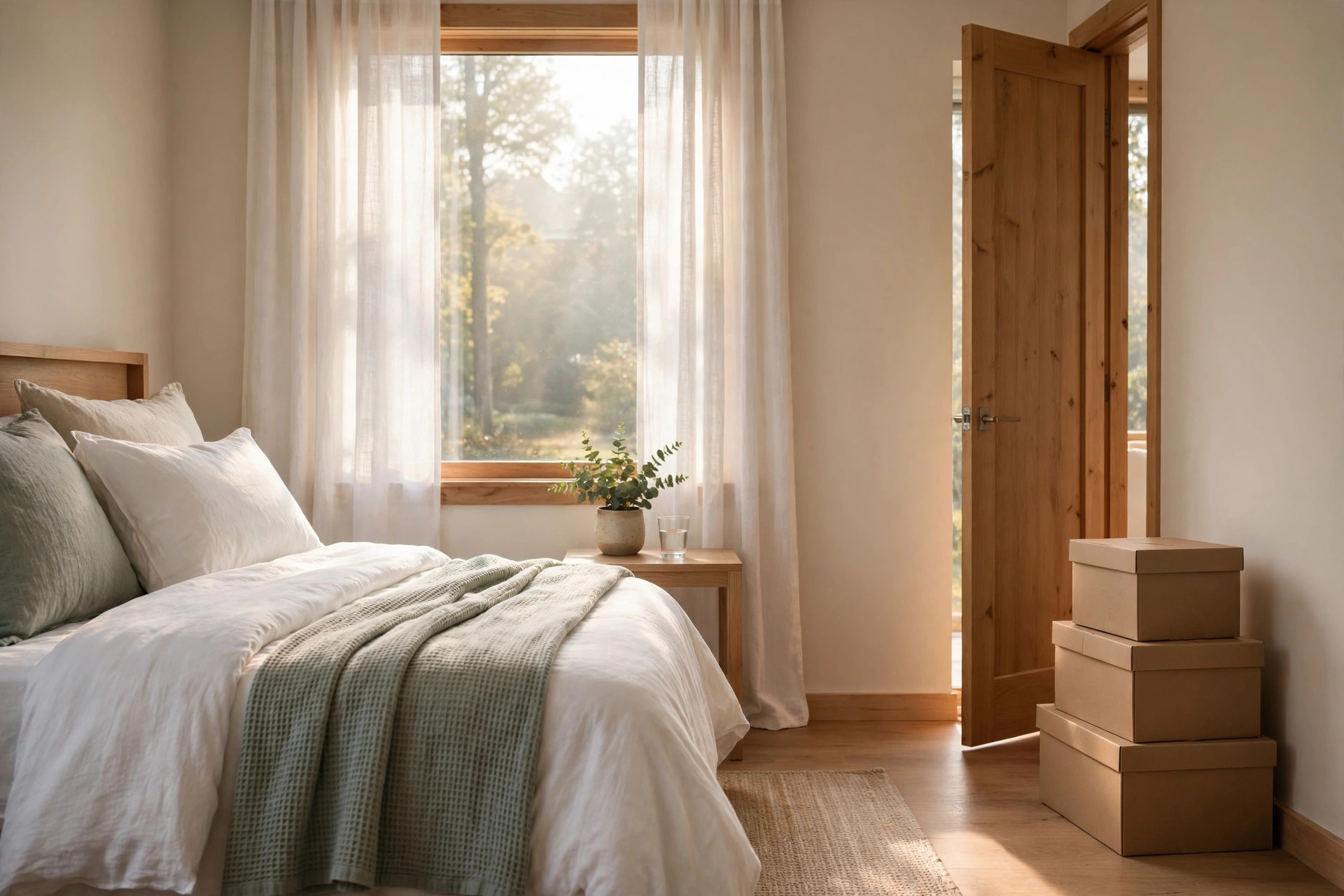
My bedroom got messy slowly and then stayed messy for a long time. Not dirty — just cluttered. The chair that became a wardrobe, the nightstand buried under chargers and books, the closet with clothes I hadn’t worn in two years. I kept waiting for a free day to fix it, and the free day never came.
So one weekend I stopped waiting and just did it, using the plan below. Saturday and Sunday, with real breaks and a hard stop each evening — because burnout halfway through a pile is how bedrooms stay messy for years.
Before you start: set up (Friday night, 20 minutes)
Grab four bags or boxes and label them: Trash, Donate, Relocate (belongs in another room), and Keep elsewhere in bedroom (stays, but not here). Also keep a notepad for the “shopping list” — organizers or storage you realize you need. Do not buy anything until the decluttering is done; you cannot organize clutter, and you will buy the wrong things if you shop first.
Put on music or a podcast, set a timer for each block, and work in this order — it’s designed so each step makes the next one easier.
Saturday morning: surfaces (90 minutes)
Nightstands (20 min). Clear them completely. Keep: lamp, one book you are actually reading, phone charger, water glass. Everything else gets sorted into the four boxes. Wipe the surface before putting things back — you will be shocked how different it looks.
Dresser top (20 min). Same treatment. Dresser tops become catch-alls for mail, receipts, and random objects. If it has not been touched in a month, it does not live on the dresser.
The chair / floor clothes (25 min). Be honest: the “chairdrobe” is a laundry system failure, not a storage problem. Sort into clean (hang or fold now), dirty (hamper), and “worn once, could rewear” — for the last group, install two or three hooks on the wall or the back of the door. Hooks legitimize the rewear pile and kill the chair.
Under the bed (25 min). Pull everything out. Dust bunnies the size of actual bunnies live here. Keep only flat storage that fits fully underneath — if boxes stick out, they are visual clutter. This is prime space for off-season clothes or extra bedding in proper containers.
Saturday afternoon: the closet (2 hours)
The hanger trick, accelerated. Instead of waiting six months, do it by interrogation: pick up each item and ask when you last wore it and whether it fits right now. “Someday” clothes — the aspirational sizes, the damaged “I will fix it” pile — go in Donate. If you have not worn it in a year and it is not occasion-specific (a suit, a gown), out it goes.
Shoes. Line them up and be ruthless. Worn-out soles, pairs that hurt, duplicates — donate or trash. A simple shoe rack or over-the-door organizer beats a floor pile.
Fold and file. For drawers, fold clothes so they stand upright (file folding) instead of stacking. You can see everything at a glance, and drawers hold more.
Sunday morning: the rest (90 minutes)
Books and media. Keep the ones you will reread or that mean something. The aspirational stack — books bought for the person you wish you were — can go. I kept twelve and donated thirty. The twelve I actually read.
Cables and electronics. One box for all chargers and cables, each coiled with a twist tie. If you don’t know what a cable is for, you don’t need it. Old phones and dead batteries go to e-waste recycling.
Sentimental items. Do these last, when decision fatigue is lowest-stakes elsewhere. Keep what genuinely matters; photograph the rest before letting it go. I photographed a stack of old concert ticket stubs and threw away the stubs. The memory is in the photo.
Take out the Trash and Donate boxes immediately. Bags that sit in the hallway for a month are just relocated clutter. Donations go in the car today.
Sunday afternoon: set up the systems (60 minutes)
Decluttering without systems is temporary. Install the few things from your shopping list:
- Hooks for rewear clothes (back of door or wall)
- A hamper where clothes actually land — if the hamper is in the closet but clothes land on the floor by the bed, move the hamper
- A small tray or bowl on the nightstand for the pocket-dump (keys, wallet, glasses)
- Drawer dividers so folded clothes stay filed instead of collapsing
The maintenance rule
Five-minute nightly reset: clothes to hamper or hooks, surfaces cleared, bed made in the morning. A bedroom that takes five minutes a day to maintain never needs another weekend overhaul. Mine hasn’t — and it’s been months.
Kids’ bedrooms: the same plan, simplified
Kids’ rooms need the same system with lower expectations and more visual cues. Use picture labels on bins so non-readers know where things go. Involve kids in decisions about their own things — they’ll maintain systems they helped build. For teenagers, negotiate rather than dictate: agree on the non-negotiables (no food waste, clear floor) and let the rest be theirs.
What to do with the Donate pile
Do not let donations sit. Clothes in good condition: local charities, shelters, or consignment. Books: library sales, little free libraries, schools. Electronics: e-waste programs — many big-box stores take them free. Furniture: list it free for pickup; someone will take a usable dresser within hours.
The bottom line
You do not need a bigger bedroom — you need less in it and a place for what remains. One focused weekend, honest decisions, and systems that match how you actually live. That’s the entire plan, and it worked on the messiest room in my house.
Leave a Reply