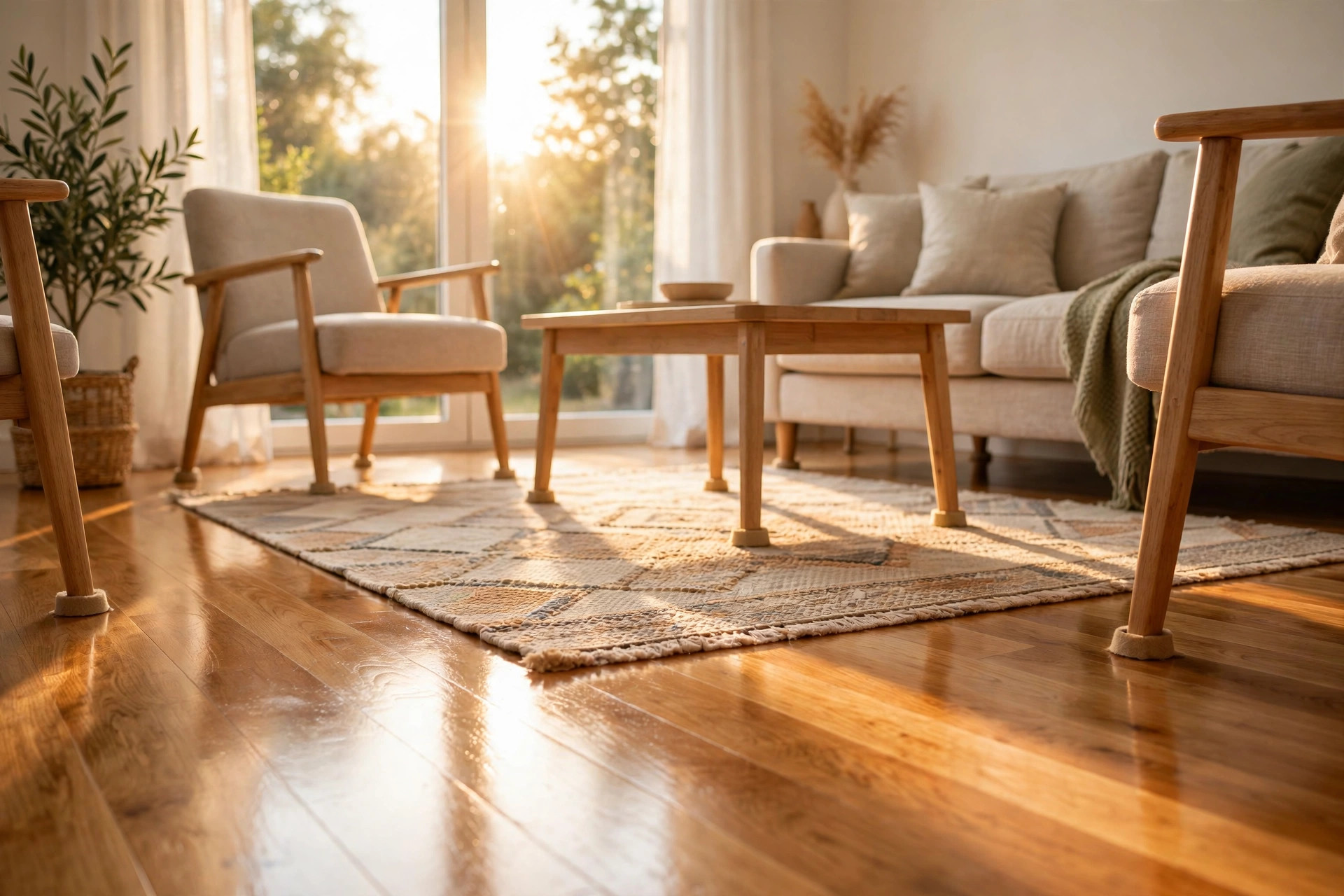
I love our hardwood floors now. I did not love them three years ago, when a well-meaning internet recipe told me to mop them with vinegar and water “because it’s natural.” Six months later, the finish in our traffic lanes had gone dull and hazy, and I had no idea why. A flooring contractor finally told me: vinegar is acidic enough to etch polyurethane over time. Natural does not mean harmless.
Since then, I’ve become the person friends text photos of floor damage to. Here’s everything I’ve learned — the routines that work, the products to avoid, and how to fix the damage I already caused.
The vinegar mistake (and why the internet loves it)
Vinegar-and-water is the internet’s favorite DIY floor cleaner because it’s cheap, it cuts grease, and it smells like you’re doing something virtuous. The problem: vinegar sits around pH 2–3, and polyurethane — the finish on the vast majority of hardwood floors installed in the last 30 years — dulls under repeated acid exposure. It doesn’t happen in a week. It happens over months, and by the time you notice the haze, the damage is in the finish, not on it.
I switched to a pH-neutral cleaner made specifically for hardwood, applied with a well-wrung microfiber mop. That’s the entire product list. If a cleaner doesn’t say it’s for hardwood floors, don’t use it on them.
The routine that actually works
Hardwood maintenance is 90 percent prevention. Here’s the schedule I keep:
- Dry mop or vacuum weekly. Grit is hardwood’s worst enemy — tiny particles of sand and dirt act like sandpaper under shoes and furniture. Use the hard-floor setting (beater bar off) or a soft brush attachment.
- Damp-mop monthly — damp, not wet. The mop should feel barely damp to the touch. Standing water seeps between boards, causing cupping, warping, and finish damage.
- Clean spills immediately. Water, pet accidents, and food spills get wiped up right away — not “later.” Even finished wood is only water-resistant, not waterproof.
What never to use
- Vinegar and water — dulls polyurethane finishes over time (ask me how I know).
- Steam mops — force moisture into board seams regardless of what the marketing says.
- Wax on polyurethane finishes — wax builds up, traps dirt, and prevents future refinishing from bonding properly. Paste wax is only for old wax-finished floors — know which finish you have.
- “Mop and shine” oil-based products — build up residue that dulls the floor and complicates future refinishing.
- Abrasive scrubbers and harsh chemicals — steel wool, scouring pads, and ammonia-based cleaners scratch and strip finishes.
Protection: the habits that prevent damage
Furniture pads on everything. Felt pads under every chair leg, table leg, and heavy furniture piece — and check them yearly, because worn pads collect grit and scratch worse than bare legs. This is the single highest-impact protection habit.
Rugs in the right places. Area rugs at entrances, in front of the kitchen sink, and under the dining table absorb the grit and chair-scraping that wear finishes fastest. Use rug pads underneath — they prevent slipping and allow airflow so moisture doesn’t get trapped.
Pet nails trimmed. Dog nails click-clacking across hardwood leave micro-scratches that accumulate into a dull traffic pattern. Keep nails trimmed and consider runners in the dog’s main routes.
Shoe policy. High heels concentrate enormous pressure on tiny points and dent wood; gritty shoes grind it. A no-shoes policy (slippers by the door) is the kindest thing you can do for hardwood.
Sunlight management. UV fades and discolors wood unevenly — the classic “rug outline” when you move furniture. Close blinds during peak sun on south- and west-facing rooms, or rotate rugs periodically.
Humidity control. Wood expands and contracts with humidity. Keep indoor relative humidity between 30 and 50 percent year-round to prevent gaps in winter and cupping in summer.
Know your finish
Everything above assumes a modern polyurethane finish. If your floors have a wax or oil finish (common in older homes), the rules differ — wax finishes need periodic re-waxing and buffing, and water is even more dangerous. If you’re not sure what you have, rub a hidden spot with a damp cloth: if it smudges dark, it may be wax; polyurethane beads water. When in doubt, ask a flooring pro before you clean.
Fixing scratches and wear
- Surface scratches (in the finish only): a hardwood touch-up marker or stain pen in a matching tone hides them well.
- Deeper scratches (into the wood): fill with a color-matched wood filler, let dry, and touch up with a matching stain.
- Dull, worn finish in traffic areas — but the wood itself is fine: a screen and recoat (lightly abrading the old finish and applying a fresh coat of polyurethane) restores the look for about $1–$2 per square foot in most US markets. This fixed my vinegar haze.
- Deep wear, staining, or damage into the wood: full sanding and refinishing, ballpark $3–$8 per square foot. Most solid hardwood can be refinished 4–6 times in its life; engineered wood depends on veneer thickness.
Refinishing: when it’s worth it
It’s worth refinishing when the wear is widespread (not just one traffic lane), you’re already renovating, or the finish is failing in large areas. It’s not worth it for a single scratched room if the rest looks fine — spot-repair and recoat just that area. DIY refinishing is possible — drum sanders usually rent for around $60–$80 a day at tool-rental shops — but sanding is unforgiving: one pause with the drum down leaves a divot. I hired out my recoat and DIY’d everything else, and I’d do it the same way again.
The bottom line
Here’s the short version of three years of learning: skip the vinegar, keep grit and water off the floors, put felt pads under everything, and clean with a pH-neutral hardwood cleaner applied damp. Do that, and your floors will look better at year ten than most floors look at year three. I know, because mine are finally getting there — one screen-and-recoat after the vinegar incident.
Leave a Reply