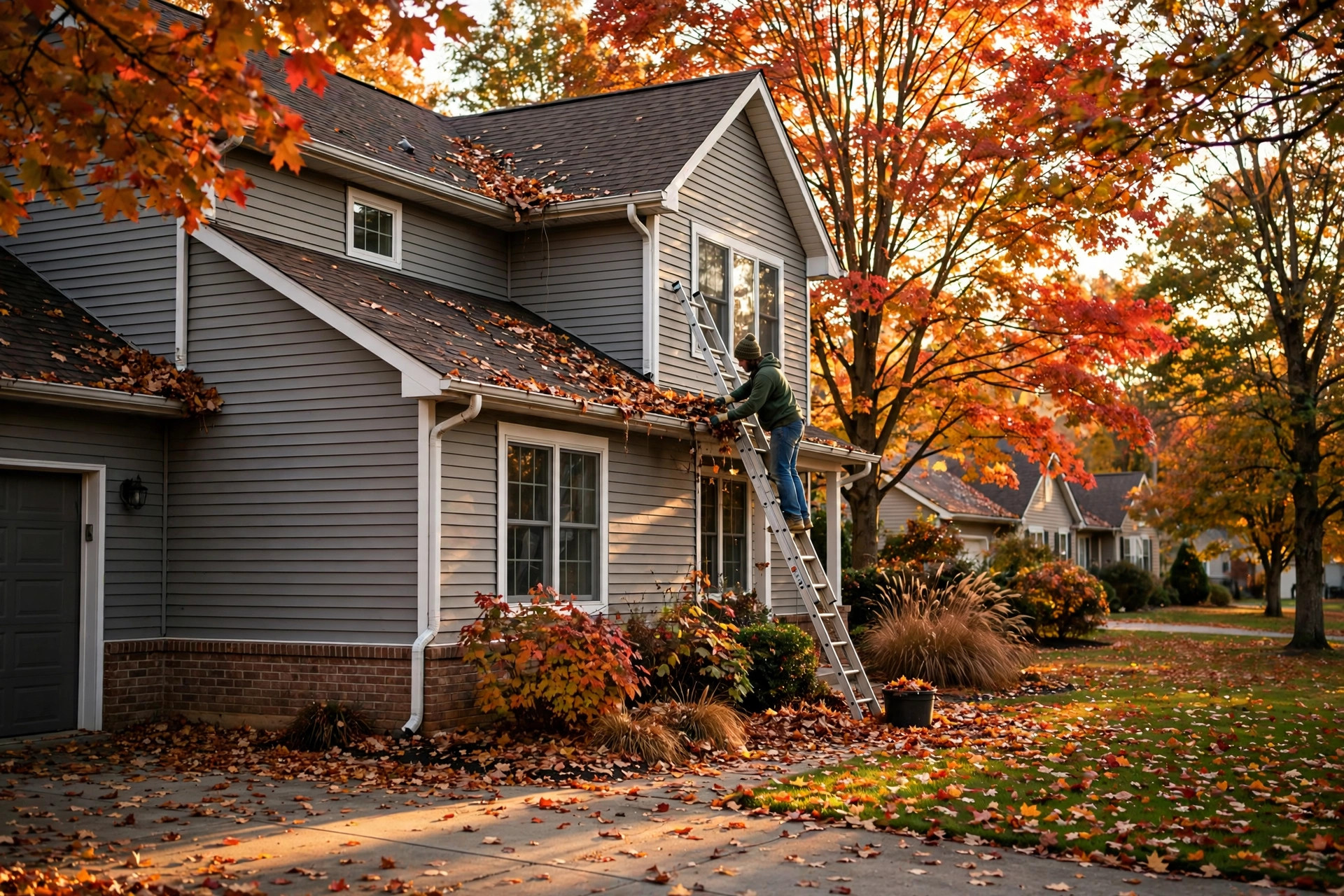
Fall is the one season where being a little obsessive pays off. Everything you do in September and October is really about one thing: not getting a panicked, expensive phone call in January. I’ve gotten those calls — one from a burst pipe I caused, one from an ice dam I ignored. This is the checklist I wish I’d had.
I spread it over September and October, a few jobs at a time:
The heating system: start here
Get the furnace tuned up. A fall inspection catches worn parts, cleans burners, and confirms safe operation before the system runs daily for months. My math: a tune-up costs a fraction of an emergency no-heat call on a 15-degree night at weekend rates. I book ours every September.
Put in a fresh filter to start the heating season, then check it monthly through winter.
Test the thermostat before you need it. Switch to heat mode on a mild October day and confirm the furnace fires up and the house warms evenly. Finding out your heat doesn’t work on the first freezing night is a special kind of regret. Got a programmable thermostat? Set the winter schedule now while you’re thinking about it.
Bleed the radiators on hot-water heat. Cold spots at the top mean trapped air — a radiator key and a small towel fix each one in minutes.
Outside and the roof: the ice dam story
Clean the gutters — then check them again. Clogged gutters overflow against your foundation, and in winter they build ice dams that push meltwater under your shingles. I used to clean mine once in October. Then one February we got a water stain on the living room ceiling: “Your gutters were full of maple helicopters,” the roofer said. Now: clean after most leaves are down, check once more before the first hard freeze. Twice is the rule that stain taught me.
Look at the roof from the ground. Binoculars, scan for missing, cracked, or curling shingles. If something looks off, call a roofer now — January roof work is miserable and costs more.
Check flashing and sealant around chimneys, vents, and skylights. A tube of caulk today is eight dollars; the ceiling stain it prevents is eight hundred.
Trim tree branches hanging over the roof or near power lines. Ice-loaded branches snap — you don’t want them landing on shingles at 2 a.m.
Windows, doors, and insulation
Weatherstrip the drafty ones. On a windy day, run your hand around door and window frames. Self-adhesive foam tape and door sweeps are cheap and go on in minutes — I did our back door in twenty minutes and the hallway stopped feeling like a walk-in cooler.
Peek into the attic. Pop your head up: insulation should be level and even, roughly 10 to 14 inches deep in cold climates. When I first looked in ours, there was a bare patch the size of a welcome mat where someone had clearly been crawling around. A few bags of blown-in insulation fixed it in an afternoon.
Reverse the ceiling fans to clockwise on low, pushing warm air back down.
Deal with window AC units. Pull them out or cover them properly — an uncovered unit is basically a hole in your wall all winter.
Plumbing: the frozen pipe story
Shut off and drain the exterior faucets. Disconnect every hose, shut the interior valve if you have one, and open the outside spigot to drain. Three years ago I left a hose connected “just for one more week,” we got an early freeze, and the pipe burst inside the wall — just under $400 for the plumber, plus drywall I patched myself. A burst spigot pipe is one of the most common winter insurance claims, and it’s almost entirely preventable. Unhook the hose. Today.
Insulate exposed pipes in crawl spaces, garages, and attics with foam pipe sleeves. A couple dollars each, seconds to slide on.
Find your main water shutoff — now, before you need it. If a pipe bursts, minutes matter. Mine’s in the utility room behind the water heater — exactly where you’d never look in a panic. My trick: I tied a bright red ribbon on the valve handle. Everyone in the house knows the red ribbon means “turn here if water is spraying where it shouldn’t.” Thirty seconds. Do it today.
Flush the water heater. Drain a bucket or two from the tank’s drain valve to clear sediment — better efficiency, longer tank life. First time I did it, the water came out the color of weak coffee.
Fireplace and safety
Get the chimney swept if you burn wood. Creosote buildup is a leading cause of chimney fires; an annual sweep is the standard recommendation.
Test every smoke and carbon monoxide detector. Replace batteries, press the test button on each. And check the manufacture dates — detectors expire. Replace smoke detectors over 10 years old, CO detectors over 7. I found two in our house that were 14 years old. They were decorative at that point.
Check the fire extinguisher. Gauge in the green, somewhere you can actually grab — ideally one per floor, one in the kitchen.
The yard and equipment
Winterize the mower and garden tools. Run the mower dry or add fuel stabilizer, clean the deck, store everything dry. I killed a carburetor once by skipping the stabilizer. Never again.
Blow out the sprinklers before the first hard freeze. Frozen water in irrigation lines cracks them.
Store or cover patio furniture and bring in anything that won’t survive freezing.
Stock winter supplies early. Ice melt, a decent snow shovel, emergency basics — cheapest before the first storm warning.
Garage and shed
Test the garage door. Cold makes old springs brittle. If the door is noisy, slow, or uneven, get the springs and cables inspected before one snaps in January — a snapped spring is loud and traps your car inside. Hit rollers and hinges with silicone spray while you’re at it.
Protect stored liquids. Paint, cleaners, and car fluids can freeze and burst their containers. Move temperature-sensitive stuff off the garage floor into a cabinet against the house wall — the warmest spot in the garage.
Check the shed roof and door. Clear debris off the roof and make sure the door closes fully — a shed that takes on water all winter becomes a mold box by spring.
The air you’ll breathe all winter
Your house is about to be sealed tight for months, so fall is when you think about what you’ll be breathing. Fresh HVAC filter — consider stepping up to a pleated MERV 8+ for winter if allergies are an issue.
Clean the dryer vent. A clogged vent is a fire hazard that gets worse with heavy winter laundry. Disconnect and brush it out, or hire it done. I pulled enough lint out of ours one fall to stuff a pillow.
Check the exhaust fans in bathroom and kitchen — confirm they vent outdoors (not into the attic, which happens more than you’d think) and move real air. Weak ventilation plus a winter of cooking and showering means moisture problems by February.
Think about humidity. Winter air gets brutally dry — static shocks, cracked skin, shrinking woodwork. A whole-house humidifier on the furnace is the low-maintenance answer. Portable units work too, but clean them regularly or they’ll grow exactly what you’re trying to avoid.
My actual schedule
- Early September: roof check with binoculars, first gutter pass, tree trimming, book the chimney sweep
- Late September: furnace tune-up, weatherstripping, attic insulation peek
- October: exterior faucets and hose removal, sprinkler blowout, detectors and extinguisher, yard equipment winterized
- Before first freeze: final gutter check, winter supplies stocked, red ribbon confirmed
Print it, stick it on the fridge, check things off. Future you — warm, dry, and not calling an emergency plumber in February — says thank you.
Leave a Reply