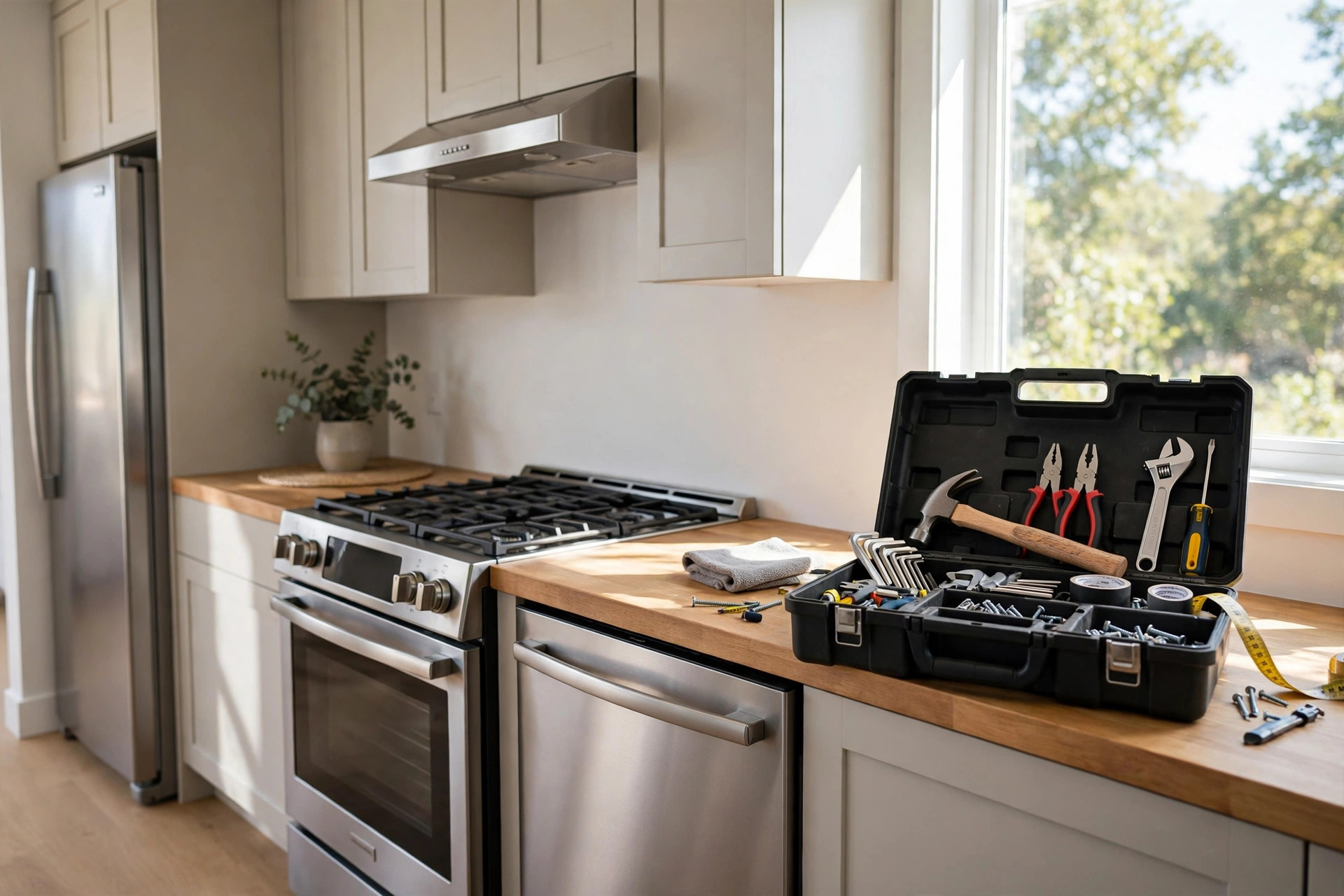
There’s a special dread that comes with an appliance making a noise it never made before. You’re standing in the kitchen, staring at the fridge like it’ll confess, and the only question in your head is the expensive one: pay to fix this, or pay way more to replace it?
I’ve been through this dance with four different appliances, and the right answer is usually knowable in five minutes — if you ask the right questions in the right order.
My starting point: the 50% rule
The rule of thumb every honest repair tech I’ve met uses: if the repair costs more than half of what a new appliance costs, replace it. A $400 repair on an $800 dishwasher is throwing money into a hole. That same $400 on a $2,000 refrigerator? Totally reasonable.
The trap — and I fell into it — is agreeing to the service call before you know what anything costs. That diagnostic visit gets charged whether you fix the thing or not.
Then check the age: the halfway test
Every appliance has a typical lifespan, and where yours sits on that timeline changes the math:
- Refrigerator: 13–17 years
- Dishwasher: 9–13 years
- Washing machine: 10–14 years
- Dryer: 13–18 years
- Gas range: 15–19 years
- Microwave: 9–11 years
- Garbage disposal: 8–12 years
My version: if the appliance is past the halfway point of its expected life and the repair is expensive, I replace it — because the next breakdown is already lining up. A 12-year-old dishwasher needing a $300 pump is a replace, no debate. A 4-year-old washer needing a $150 belt is a repair, every time.
The hidden math: energy bills
A fridge from 2005 can use twice the electricity of a current Energy Star model. So if your broken appliance is 12+ years old, add the energy savings into the decision. Over five years, the savings can cover a surprising chunk of the purchase price.
The five appliances, one by one
1. The refrigerator
I’d repair when: it’s under 10 years old and the problem is a thermostat, fan, icemaker, or door seal. These are contained, affordable fixes. My icemaker died at year six — $180 fix, fridge ran five more years, easy win.
I’d replace when: the compressor or sealed refrigerant system fails. That runs $500 to $1,000+, hitting the 50% threshold almost immediately. Also replace if it’s over 13 years old and needs anything beyond a minor fix, or if your energy bills suggest it’s an old energy hog.
Watch for: food spoiling faster than it should, constant running, or excessive frost — all signs the sealed system is struggling.
2. The washing machine
I’d repair when: the issue is a belt, pump, lid switch, or drain hose on a machine under 8 years old. These are among the cheapest appliance repairs out there.
I’d replace when: the transmission or main bearing fails (often $400+), the tub cracks, or the machine is over 10 years old with a major fault. One flag: a front-loader with a persistent mold smell that survives deep cleaning is usually telling you it’s done.
Watch for: violent shaking that leveling doesn’t fix, water that won’t drain, or error codes that return after resets.
3. The dryer
I’d repair when: it’s a heating element, thermostat, thermal fuse, or belt. Classic inexpensive repairs, and dryers live long lives — mine is at year 14 and still going.
I’d replace when: the drum is damaged, the motor fails on a 12+ year old unit, or you’ve repaired it twice in two years. Also consider a heat-pump model when replacing a very old electric dryer — roughly half the energy.
Watch for: clothes taking two cycles to dry. But clean the vent first — a clogged vent mimics a dying dryer perfectly, and I nearly replaced a good dryer over a lint-clogged vent hose. That cost me a service call and a lesson I’ll never forget.
4. The dishwasher
I’d repair when: it’s under 7 years old with a pump, latch, or spray-arm issue.
I’d replace when: the motor or control board fails on a unit past year 8, the tub is cracked or rusting through, or dishes come out dirty after you’ve cleaned the filter and spray arms. Newer models use far less water — a 15-year-old dishwasher can use twice the water per cycle.
Watch for: water leaking from the door (check the gasket first — a cheap fix), or a persistent bad smell that deep cleaning doesn’t resolve.
5. The gas range / oven
I’d repair when: an igniter, burner cap, or thermostat fails. Routine fixes, and ranges are the longest-lived appliances in the kitchen — the one I’d almost always try to save.
I’d replace when: the oven won’t hold temperature from a failing control board on an older unit, there are gas smell issues a technician traces to the appliance itself (safety first — call immediately), or it’s pushing 18+ years and needs anything expensive.
Watch for: uneven baking, burners that click without lighting, or a yellow, floppy flame instead of crisp blue.
The questions I ask every repair tech
Before authorizing anything, I ask: What exactly failed, and what’s the total cost including parts and labor? Is this a common failure for this model? Given its age, what’s likely to fail next? A good technician gives you straight answers — including “honestly, I would replace this one.” That’s not an upsell; it’s saved me twice.
Two free checks before you spend a dime
First, check the warranty. Many appliances carry longer coverage on specific parts — compressors often have 5–10 year warranties even when general coverage is 1 year. I once nearly paid $400 for a compressor repair that was still under its 10-year sealed-system warranty. Nearly.
Second, check for recalls. Search the model number on the Consumer Product Safety Commission site. A surprising number of “broken” appliances are recalled units eligible for free repair. Two minutes of searching.
If the verdict is “replace”: what I’d pay attention to
Measure twice. Fridges and laundry pairs have to fit through doors and into their alcoves — measure the space, the doorways, and the delivery path. Returns on large appliances are painful. I learned this the theatrical way: a fridge that fit the alcove perfectly but wouldn’t clear the kitchen doorway.
Check the EnergyGuide label. Compare yearly operating costs, not sticker prices. A $200 cheaper dishwasher that costs $40 more per year to run is no bargain.
Read reliability ratings. Consumer Reports and similar sources track repair rates by brand. Some brands are consistently cheaper to own over a decade even at a higher purchase price. The sticker price is the least important number on the tag.
Time your purchase. Major appliances go on deep sale around holiday weekends (Memorial Day, Labor Day, Black Friday) and when new models arrive in fall. If yours can limp along, waiting for a sale can save you hundreds.
My bottom line
Every breakdown runs through three filters: the 50% rule, the appliance’s age versus its expected lifespan, and the energy math. Most of the time the answer is clear within five minutes — and you’ll spend your money on the option that costs less over the next five years, not just the one that feels cheaper today.
Leave a Reply